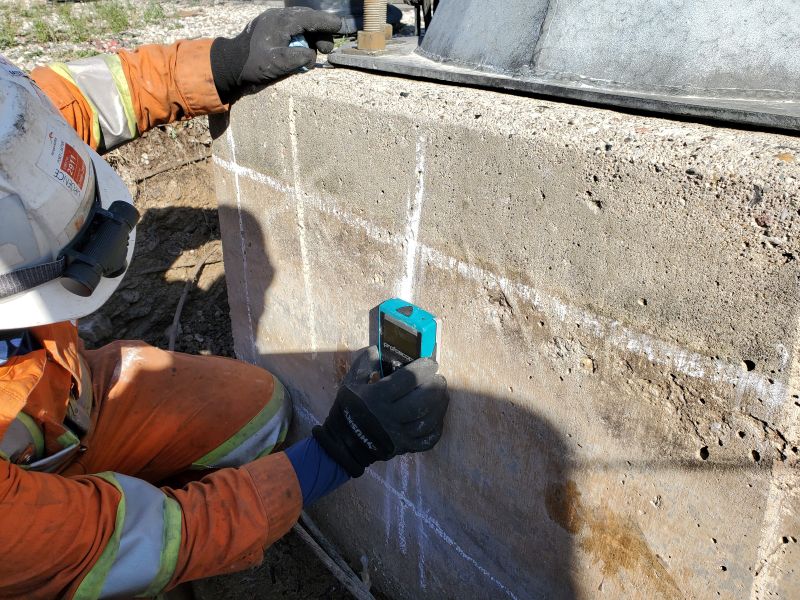
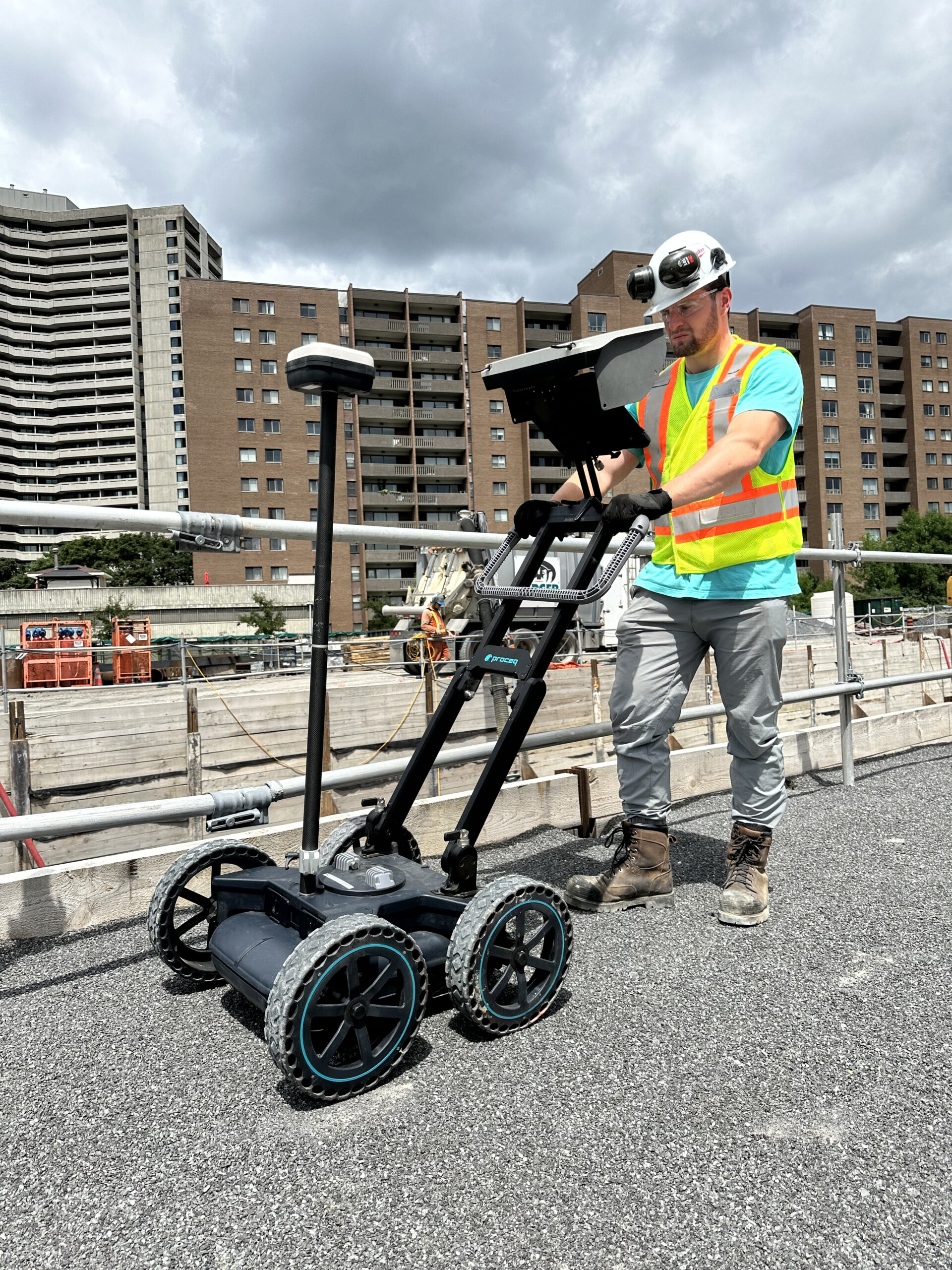
Cover Meter based on Eddy current (EC) testing is a non-destructive electromagnetic method used to locate reinforcing steel in concrete and estimate cover thickness and bar diameter. The Cover Meter method is based on electromagnetic induction rather than wave propagation.
An EC probe generates an alternating magnetic field. When the probe is placed near conductive materials such as steel reinforcement, this field induces circulating electrical currents—known as eddy currents—within the rebar. These induced currents create a secondary magnetic field that alters the impedance of the probe coil. By analyzing this change, the presence, depth, and relative size of the reinforcement can be estimated.
Eddy current testing is primarily influenced by the electrical conductivity and magnetic permeability of the reinforcement rather than the concrete itself.
However, factors such as bar spacing, congestion, and proximity of adjacent reinforcement can affect signal interpretation and accuracy.