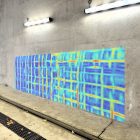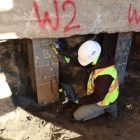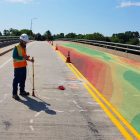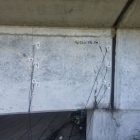

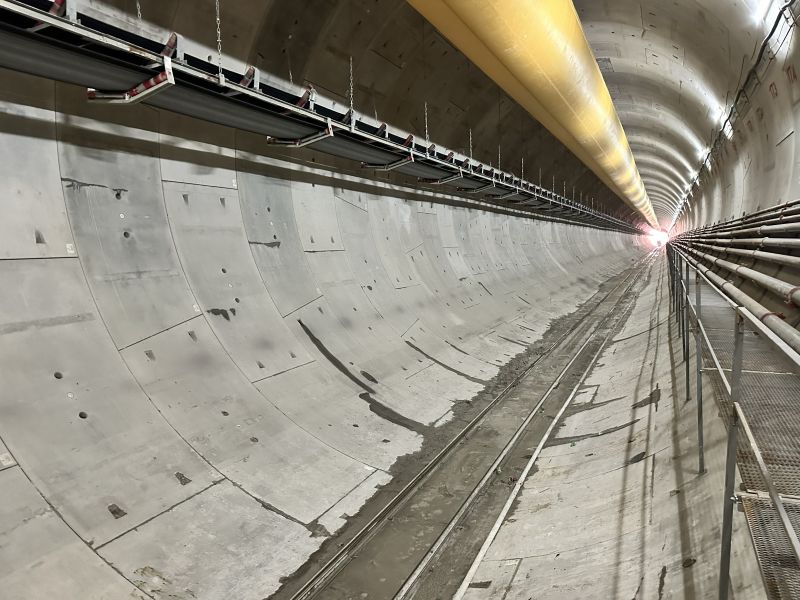
Concrete tunnel linings are critical structural elements that protect highways, railways, utilities, and underground infrastructure from ground loads, water ingress, and dynamic loads. Over time, defects such as voids behind linings, delamination, cracking, poor grouting, and material degradation can compromise performance and service life. The nondestructive evaluation of tunnel linings plays an increasingly vital role in quality control (QC) and quality assurance (QA) during construction as well as in the condition assessment of existing tunnels (Poncetti et al., 2025, White et al., 2015).
In this post, we explore the most widely used NDE techniques for tunnel lining evaluation—including Ground Penetrating Radar (GPR), Impact Echo (IE), Impulse Response (IR), Ultrasonic Pulse Echo (UPE)—and discuss how these technologies help detect voids, discontinuities, and material anomalies. We also cover common issues in new construction and existing tunnels, and how modern materials such as fiber-reinforced linings impact inspection strategies.
Why Nondestructive Evaluation Matters in Tunnel Linings
Quality Challenges in New Tunnel Construction
Even in modern tunnel construction, common defects can arise that affect the long-term performance of concrete linings:
-
Incomplete grouting between segments and rock or soil, leading to voids that cause water ingress and reduce load transfer capacity.
-
Honeycombing or poor concrete consolidation, especially in cast-in-place or sprayed concrete applications.
-
Discontinuities at construction joints or between segmental linings.
Early detection of these issues during construction allows corrective action before they become costly or dangerous. NDT provides data-driven assessment without damaging the structure, enabling efficient QC/QA workflows.
Defects in Existing Tunnels
Once in service, tunnel linings remain vulnerable to a different set of problems:
-
Delamination or debonding due to cyclic loading, freeze-thaw, or water pressure.
-
Voids behind linings from poor initial grouting or differential settlement.
-
Cracking and deterioration from environmental exposure or seismic events.
-
Reinforcement corrosion, especially where ingress of chlorides or moisture is significant.
Robust NDE supports maintenance decisions and rehabilitation planning by locating and quantifying such defects before they lead to failure.
NDT of Tunnel Linings – Key Considerations
Before selecting any NDT method for evaluation of tunnel linings, a few key factors shall be carefully studied and taken into account:
- What type of anomalies are trying to detect?
- What type of access to the lining is practically available?
- What type of materials is used in the construction of the lining?
- Is there any construction/design records available?
These key questions can help design a cost-effective and reliable test program.
Nondestructive Evaluation of Tunnel Linings
1. Ground Penetrating Radar (GPR)
Ground Penetrating Radar (GPR) uses pulsed electromagnetic energy to image subsurface structures. A transmitter emits radar pulses into the concrete, and reflections from interfaces, voids, or embedded objects are recorded by a receiver. GPR can be used for Nondestructive Evaluation of Tunnel Linings:
- Rapid screening of large areas quickly, making it valuable for initial assessments.
- Locating voids or delamination behind the lining (for normal RC lining)
- Map steel reinforcement positions and spacing.
- Estimating lining thickness variations (assuming there is clear contrast between concrete and rock/soil)
Note: The effectiveness of GPR can be reduced by dense reinforcement, high moisture content, or conductive materials like steel fibers in fiber-reinforced concrete, which reflect or attenuate radar waves.
2. Impact Echo (IE)
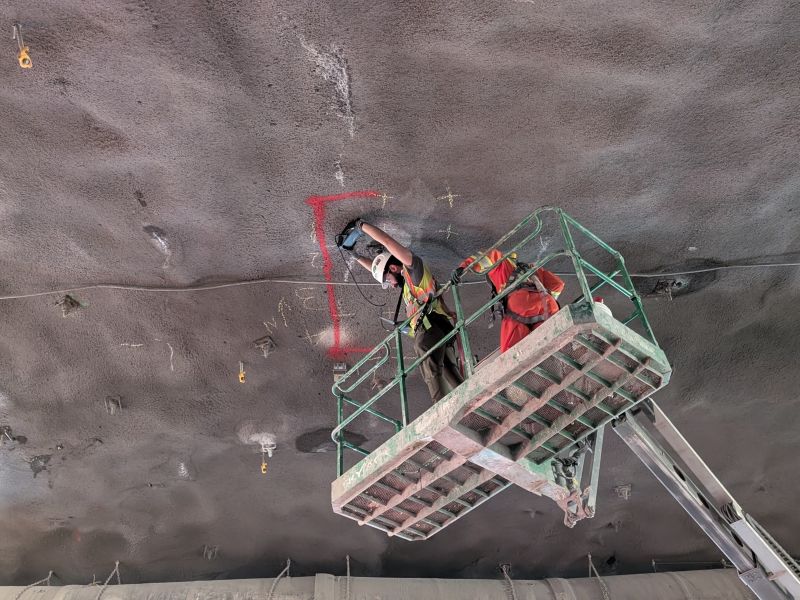
Impact Echo is a stress-wave method in which a small impact generates elastic waves that travel through the concrete and reflect off internal features. The reflected signals are analyzed in time and frequency domains to estimate thickness, detect voids, and characterize defects. Impact-Echo can be used to:
-
Detection of voids and debonding behind linings (Read more)
-
Thickness measurement of linings and shotcrete layers.
-
Assessment of grouting quality and layer interfaces.
Impact Echo is particularly useful when stress waves reflect differently at concrete-air boundaries (e.g., voids behind the lining) compared to solid media, providing a clear indicator of anomalies.
3. Ultrasonic Pulse Echo (UPE)
Ultrasonic Pulse Echo (UPE) uses acoustic stress waves to identify internal defects by measuring the reflections from material discontinuities. Modern systems generate high-frequency pulses and analyze reflected signals to map thickness variations and locate voids. UPE can be used for:
-
Detecting voids and honeycombing within or behind linings.
-
Measuring lining thickness and material uniformity.
UPE offers deeper penetration than GPR in certain conditions.
Conclusion
The nondestructive evaluation of tunnel linings is an indispensable part of both construction quality assurance and ongoing condition assessment. Technologies such as GPR, Impact Echo, Impulse Response, and Ultrasonic Pulse Echo provide powerful insights into defects like voids behind linings, delamination, and thickness variations. When applied judiciously—and often in combination—these methods enable engineers to detect hidden problems, guide maintenance decisions, extend service life, and support safer infrastructure.
By integrating advanced NDE into tunnel inspection programs, asset owners and engineers can move toward more proactive, data-driven management of their tunnel assets.