Pull-off testing is a semi-destructive method used to evaluate the in-situ tensile strength of concrete and the bond quality between concrete and applied materials, such as repair mortars, overlays, and protective coatings.
The test provides a direct measure of tensile resistance by applying a controlled tensile force perpendicular to the concrete surface until failure occurs.
The test is widely used for:
quality control,
condition assessment, and
acceptance of concrete repairs in structural, industrial, and infrastructure applications.
Concept of Pull-Off Test
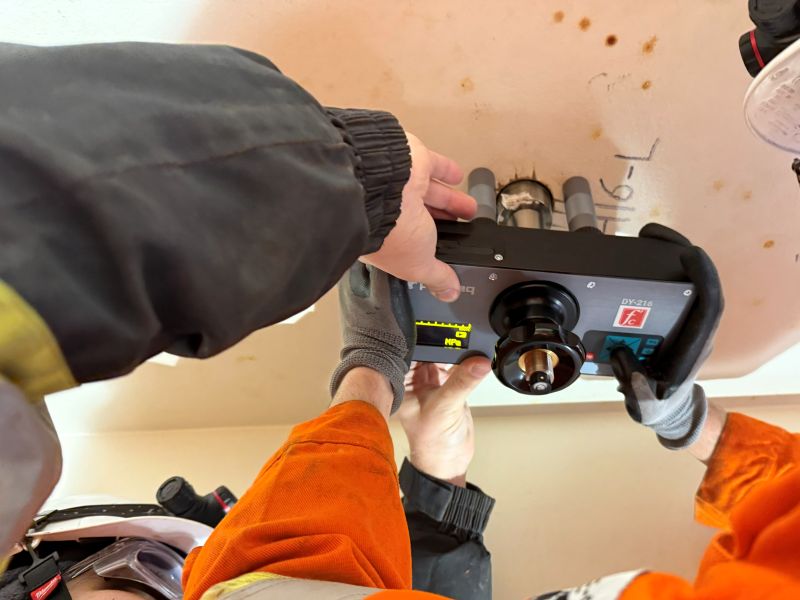
The pull-off test measures the force required to detach a bonded steel disc (dolly) from the concrete surface.
A circular steel dolly is bonded to the concrete using a high-strength adhesive
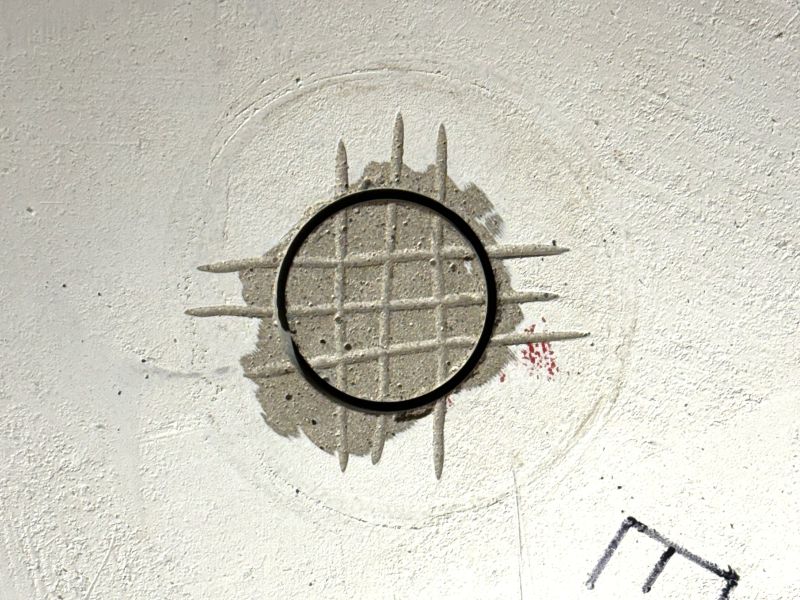
The concrete may be cored around the dolly to isolate the test area
A hydraulic or mechanical pull-off device applies a tensile load normal to the surface
Load is increased at a controlled rate until failure occurs
The maximum applied force is recorded
The pull-off strength is calculated as:
Pull Off Stress = P/A
Where:
P = maximum applied load (N)
A = dolly area (mm²)
Key Steps
Surface preparation and cleaning
Bonding of the steel dolly using approved adhesive
Optional coring around the dolly to a specified depth
Attachment of the pull-off test device
Application of tensile load at a controlled rate
Recording of maximum load and observation of failure mode
Multiple tests are performed to ensure representative results.
Key Deliverables
A pull-off testing program typically provides:
Pull-off tensile strength values (MPa or psi)
Identification of failure mode (adhesive vs cohesive)
Statistical summary of test results
Comparison with project acceptance criteria
Engineering interpretation and recommendations
Applicable Standards and Guidance
Pull-off testing is governed by established standards:
ASTM C1583/C1583M – Standard Test Method for Tensile Strength of Concrete Surfaces and the Bond Strength or Tensile Strength of Concrete Repair and Overlay Materials by Direct Tension (Pull-off Method)
ACI 546R – Guide to Concrete Repair
Please contact us for a free quotation and tell us more about your project
Thank you for your interest in requesting a work estimate, please fill out the form and we will get back to you shortly.