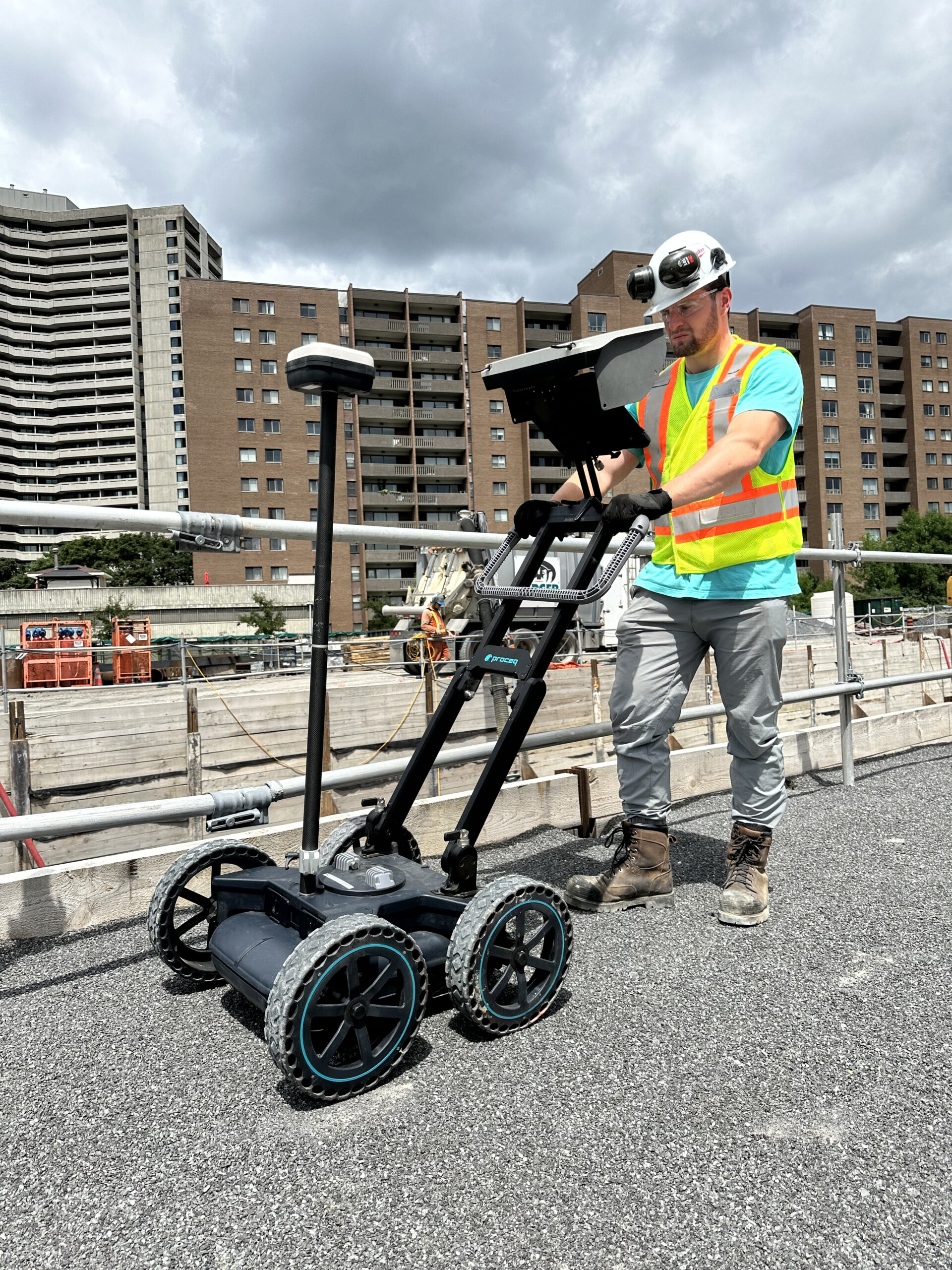
Ground Penetrating Radar – GPR
The recorded reflections are analyzed to identify:
Embedded objects (e.g., reinforcement, post-tension cables, utilities)
Layer boundaries and thicknesses
Voids, anomalies, and zones of deterioration
The travel time and amplitude of reflected signals are used to infer depth and material characteristics.
Basic Principles of GPR
Key physical principles governing GPR include:
Wave propagation: EM waves travel through materials at velocities controlled by dielectric permittivity.
Reflection: Signal reflections occur at interfaces where dielectric properties change.
Attenuation: Signal strength decreases with depth due to material conductivity and signal scattering.
Resolution vs. penetration trade-off: Higher frequencies provide better resolution but shallower penetration.
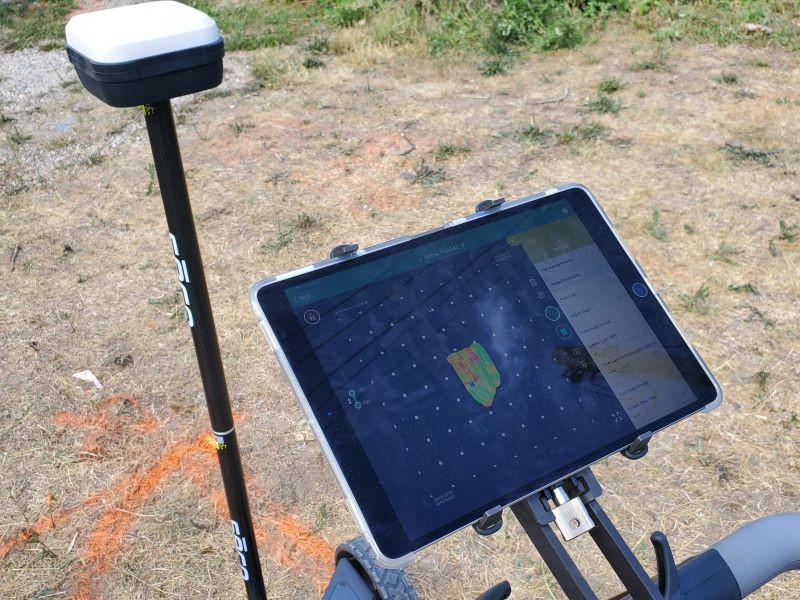
GPR data are commonly displayed as radargrams, showing signal amplitude versus time (or depth) along a scan line.
GPR Antenna Frequencies and Typical Uses
The choice of antenna frequency depends on the target size, required resolution, and investigation depth.
Typical Frequency Ranges
High frequency (1.5–2.6 GHz)
Shallow penetration, high resolution
Used for concrete scanning and structural elements
Medium frequency (400–900 MHz)
Moderate penetration and resolution
Used for pavements, slabs-on-grade, and shallow subsurface investigations
Low frequency (50–400 MHz)
Greater penetration, lower resolution
Used for soil profiling, utilities, bedrock depth, and geotechnical studies
Common Applications by Material
Concrete scanning: 1.6–2.6 GHz
Pavements and bridge decks: 400–900 MHz
Subsurface soils and utilities: 100–400 MHz
Dielectric Properties and Their Importance
The dielectric permittivity (dielectric constant) of a material controls how fast EM waves travel through it. It is a critical parameter in GPR interpretation.
Low dielectric materials (air, dry concrete) → faster wave velocity
High dielectric materials (wet concrete, clay, water) → slower velocity and higher attenuation
Dielectric properties influence:
Depth estimation accuracy
Reflection strength
Signal penetration
In concrete investigations, dielectric variations can also indicate:
Moisture ingress
Delamination
Deterioration or voids

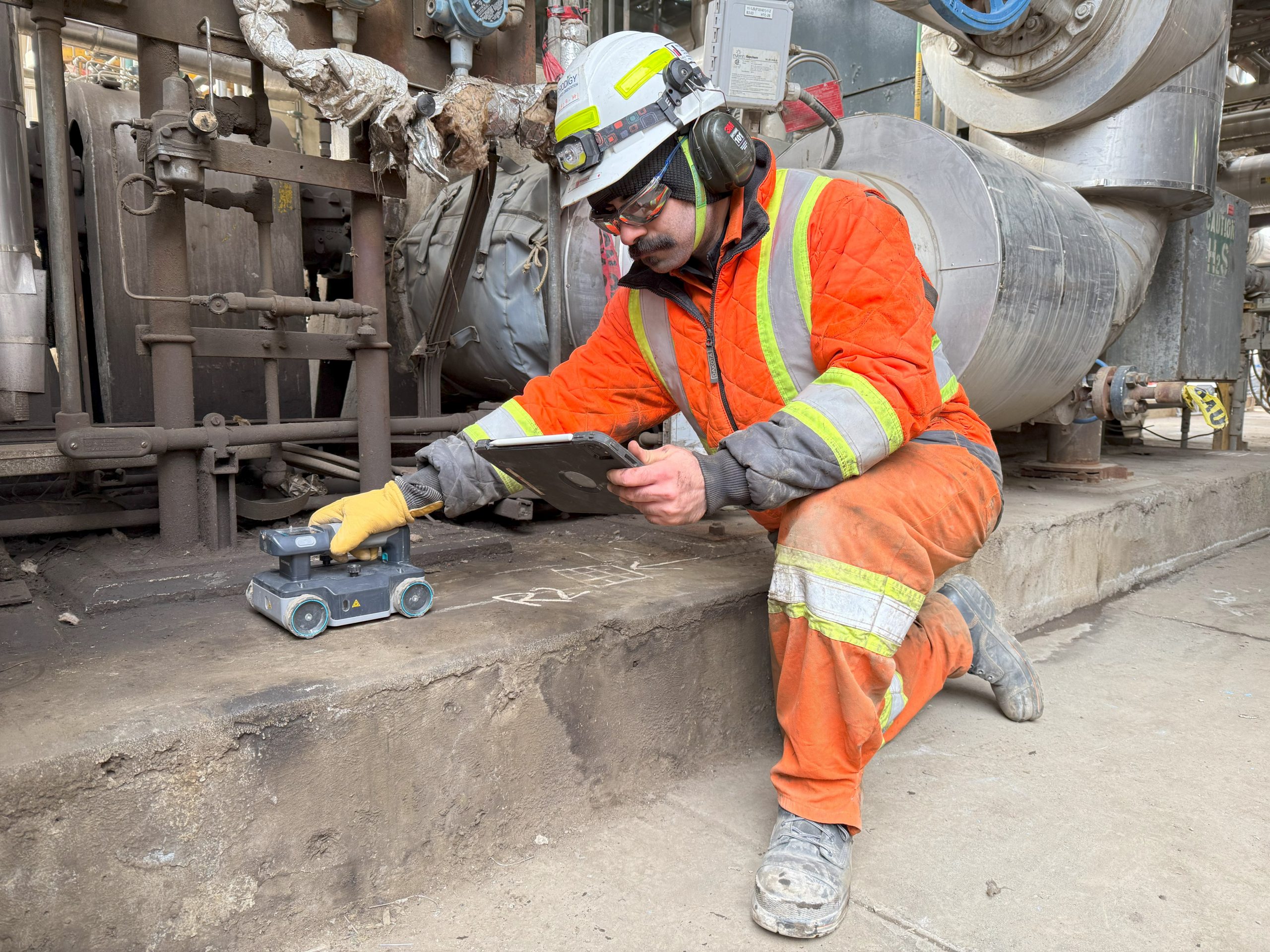
Applications of GPR in Concrete Scanning
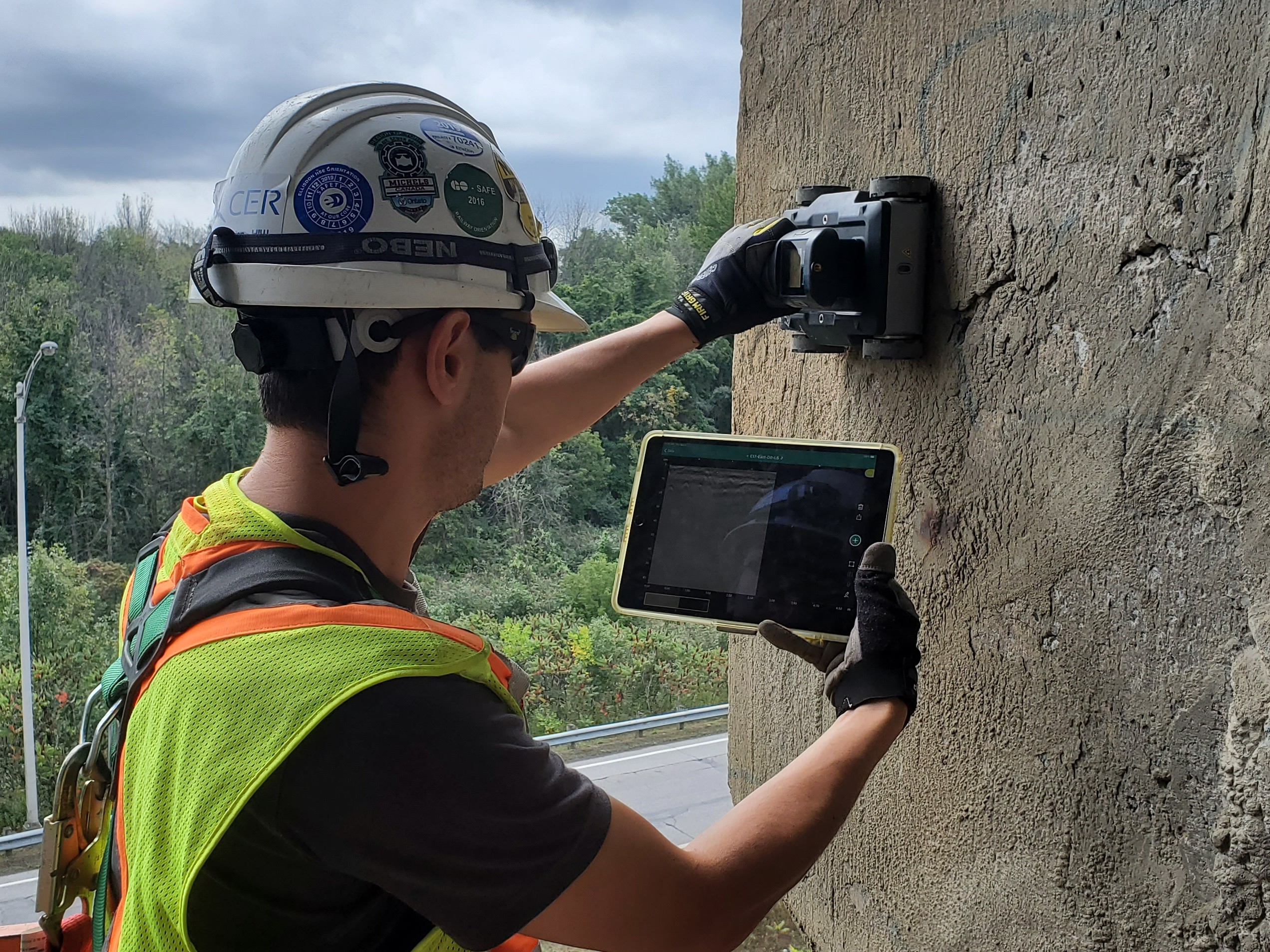
GPR is widely used in concrete structures for:
Locating reinforcing steel, post-tension cables, and conduits
Measuring concrete cover and slab thickness
Identifying voids, delaminations, and honeycombing
Supporting coring, cutting, and drilling operations
Quality verification of new construction
GPR is particularly valuable when combined with complementary NDT methods for higher confidence assessments.
Applications of GPR in Sub-Surface Investigations
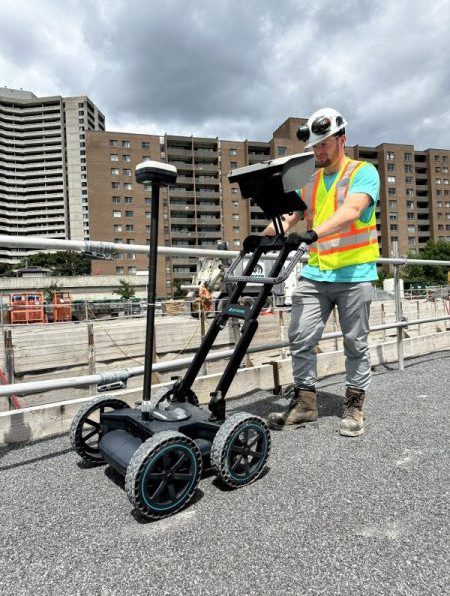
In soils and geophysics studies, GPR is used for:
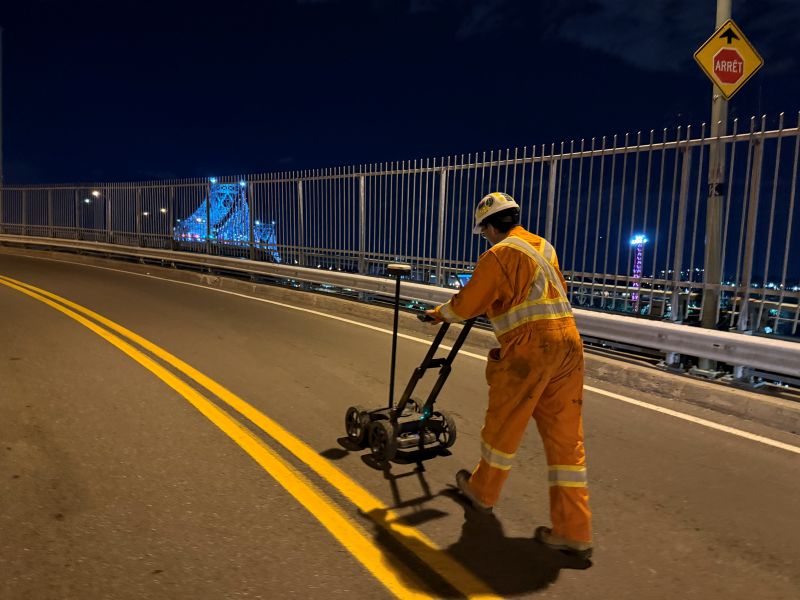
Utility detection and mapping
Identifying buried foundations and structures
Estimating pavement and soil layer thickness
Detecting voids, sinkholes, and anomalous zones
Supporting environmental and infrastructure investigations
Relevant Standards and Guidelines
While GPR interpretation requires professional judgment, several standards and guidelines support its application:
ASTM D6432 – GPR survey of subsurface utilities
ASTM D4748 – Determination of pavement layer thickness using GPR
ASTM D6087 – Evaluation of asphalt-covered concrete bridge decks
ACI 228.2R – Non-destructive testing of concrete
FHWA GPR Guidelines – Highway and transportation applications
Please contact us for a free quotation and tell us more about your project